
Racecourse Architectural Visualization: Designing the Moment Before the Roar
- gad the mad

- Jul 6
- 4 min read
The Racecourse as Theatre
Some buildings are designed to be looked at.
A racecourse is designed to look back.
It holds thousands of people, directs their attention, amplifies their anticipation, and turns a few seconds of movement into a shared emotional event. The architecture does not simply shelter spectators; it frames the drama.
This racecourse architectural visualization project by GAD was developed as a study in spectacle, atmosphere, and storytelling. The aim was not only to show the building, but to show what the building makes possible: the roar of the crowd, the tension on the track, the private rituals before the race, and the social world that unfolds around it.
The result is a visual narrative that moves between scale and intimacy — from aerial race day views to cinematic close-ups of horse and rider.
A Grandstand Built for Anticipation
The grandstand is the emotional engine of the project.
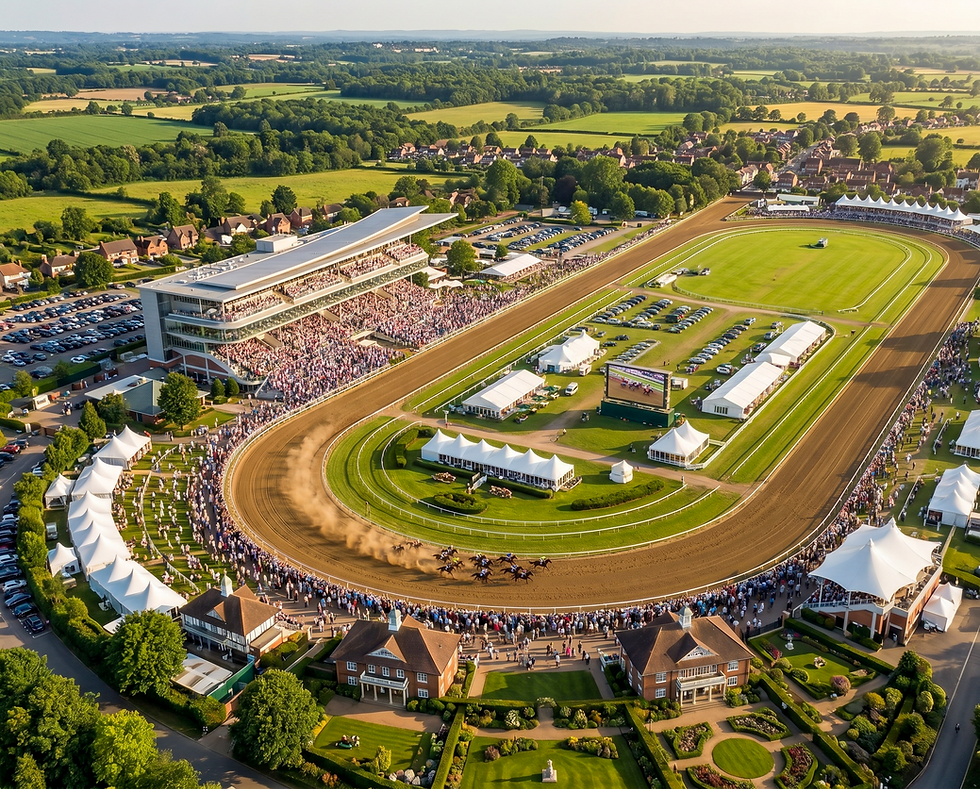
Its sweeping roofline stretches across the scene like a gesture of motion, even when the building itself is still. Layered balconies, glass-fronted viewing decks, and open terraces create a vertical theatre of spectators, where every level participates in the energy of the race.
On race day, the architecture becomes dense with movement. Crowds lean forward. People gather along railings. The building is no longer a static object; it becomes a vessel for collective attention.
This is where visualization becomes more than representation. A technical render might show the roof, the façade, and the seating. A visual narrative shows what those elements feel like when they are filled with people, noise, sunlight, and expectation.

Seeing the Whole Event Landscape
From above, the racecourse becomes a complete ecosystem.
The track, grandstand, parade ring, hospitality tents, gardens, parking, crowd routes, and surrounding landscape all work together to create the race day experience. The aerial visual is important because it reveals the racecourse not as a single building, but as an event landscape.
This wider view also shows the choreography of the venue. People arrive, gather, move, watch, celebrate, and disperse. The architecture is only one part of the story; the real design challenge is how all these moments connect.
For developers, operators, and architects, this type of visualization is especially valuable. It communicates scale, atmosphere, circulation, and commercial potential in one frame.

Speed as an Architectural Experience
A race lasts only a moment.
But the architecture must make that moment feel unforgettable.
Several visuals in this series focus on the horses in motion, cutting through dust while the grandstand blurs behind them. These images are not just about the horses. They are about the relationship between speed and structure.
The track creates the foreground drama. The crowd creates the emotional pressure. The grandstand becomes the backdrop that gives the moment scale.
In one image, the horses rush past the packed stand in full daylight. In another, the movement becomes almost cinematic, with motion blur, dust, and a charged sense of speed. In the black-and-white frame, the leading jockey raises the whip, turning the race into something iconic and timeless.
Together, these visuals show how sports architecture can be communicated through movement, not just form.
Before the Crowd Arrives
The most interesting venues have two lives.
There is the public life: loud, polished, ceremonial.
And then there is the private life: early mornings, training dust, quiet routines, and moments that happen long before the grandstand is full.
This project explores both.
In the quieter scenes, the racecourse is almost empty. The grandstand sits in the background, softened by haze and morning light. A horse rears in the dust. A jockey reaches out to calm a horse. Another frame captures the playful reality of a horse rolling in the dirt.
These are not traditional architectural views, but they are essential to the story of the place. They remind us that a racecourse is not only a venue for spectators. It is also a working environment, a training ground, and a space of trust between human and animal.
By developing multiple story sketches around the same setting, GAD tests different emotional directions before choosing the strongest visual. The final image is not always the most dramatic one. Sometimes it is the one that feels most true.


The Social Architecture of Race Day
Racecourses are not only about sport.
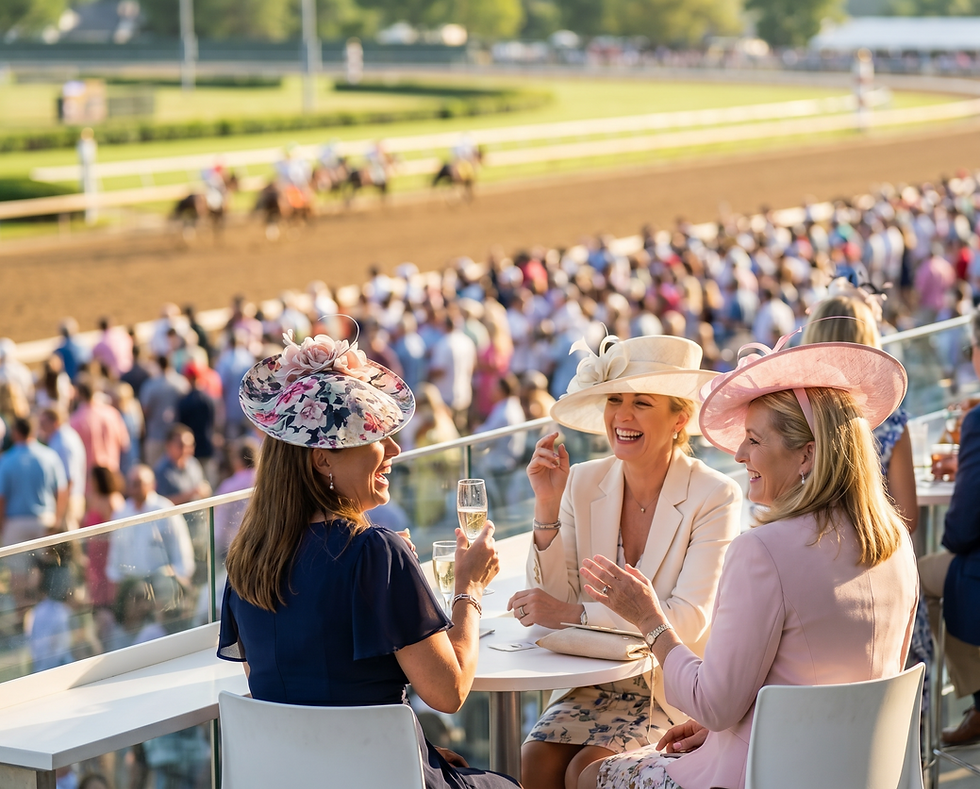
They are also about arrival, fashion, hospitality, conversation, and ritual. One of the visuals shifts the focus away from the track and into the balcony experience, where guests gather in elegant race day attire overlooking the action below.
This image is important because it captures another layer of the project: the architecture of leisure.
The balcony becomes a social room suspended above the race. The track remains visible in the background, but the story is now about atmosphere.. laughter, champagne, hats, sunlight, and the feeling of being part of an occasion.
For hospitality-led sports venues, these moments are crucial. They show how architecture can support not just viewing, but belonging.
Why Storytelling Matters in Sports Architecture Visualization
A beautiful render can show a building.
But a strong visual story can show why that building matters.
For sports and event venues, this distinction is critical. The success of the design is not only in its geometry, materials, or seating capacity. It is in the emotional sequence it creates.
What does the visitor feel when they arrive? Where does the crowd gather? How does the architecture frame the action? What happens before the event begins? What does the place feel like when it is full?
These are the questions that architectural visualization should answer.
In this racecourse project, GAD approached the venue as a living scene rather than a static structure. Each image was developed to reveal a different part of the experience: the spectacle, the scale, the speed, the quiet preparation, and the social life around the race.
The building stays consistent.
The stories keep changing.
That is where the strength of the visual narrative begins.


Conclusion: Beyond the Render
This racecourse architectural visualization project is a study in how architecture can hold emotion.
It shows the grandstand as a stage, the track as a line of tension, the crowd as atmosphere, and the horse as the force that brings everything alive.
At GAD, we believe architectural visualization should do more than present a design. It should build a world around it.
Because the strongest image is not always the one that shows the most.
It is the one that makes people feel the moment before it happens.

Comments